
Which is better: North American circuit breakers or China circuit breakers? — Differences revealed by testing procedures of UL489 and IEC60947-2
North American molded case circuit breakers primarily comply with UL 489, while China and the European system mainly adhere to IEC 60947-2. This article references an early document from Schneider Electric; although it is relatively outdated, the IEC section still uses the older notation of IEC 60947-2, yet it remains highly intuitive for observing the conceptual differences between the two testing procedures.
I. UL489: Verify circuit breakers based on their operational logic
UL489 does not first break down capabilities into individual parameters, but instead conducts tests in three sequential orders: X, Y, and Z. Here, X, Y, and Z are not levels, but rather three sets of test sequences.
1 UL489 X, Y, Z sequences
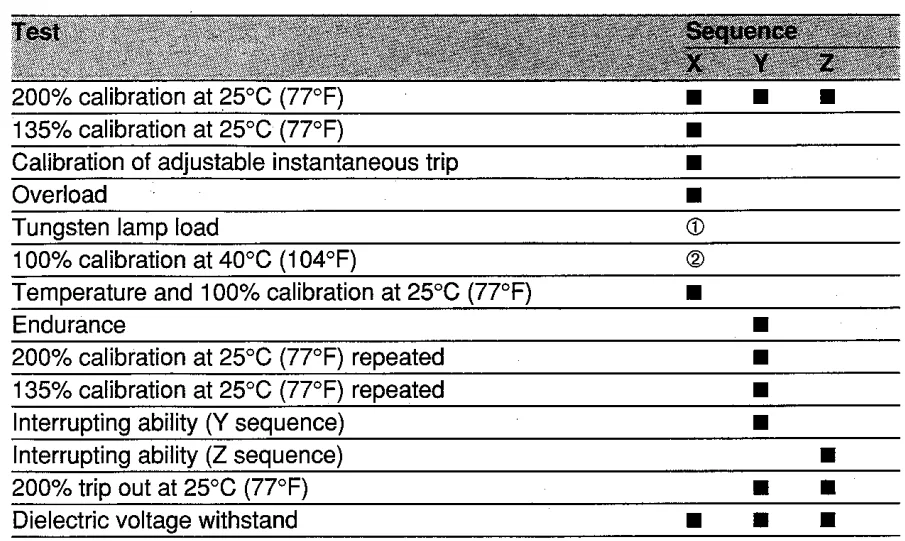
X: First, confirm the basic movements, heating, and insulation.
Y: After observing the lifespan, can it still perform the required actions and make circuit breaks as required?
Z: Determine whether it holds under more stringent shutdown conditions.UL489 does not involve first conducting a short-circuit test followed by additional routine items. Instead, temperature rise, calibration, and lifespan are the primary focus.
2 Temperature rise of UL489
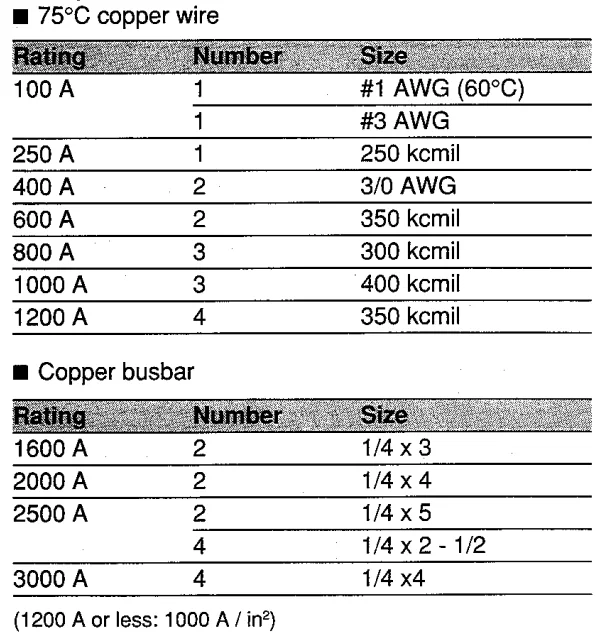
The temperature rise measurement of UL is not conducted under detached installation conditions, but rather under specified conductor conditions. In other words, it validates the heat generation performance under conditions closer to actual wiring configurations.
3 Calibration of UL489
· Calibrated at 25°C with a 200% accuracy, requiring the circuit breaker to trip within the specified time.
· A circuit breaker calibrated at 135% under 25°C conditions with a rated current exceeding 50 A shall trip within 2 hours.
· The adjustable instantaneous trip setting must fall within the tolerance range specified by the standard.
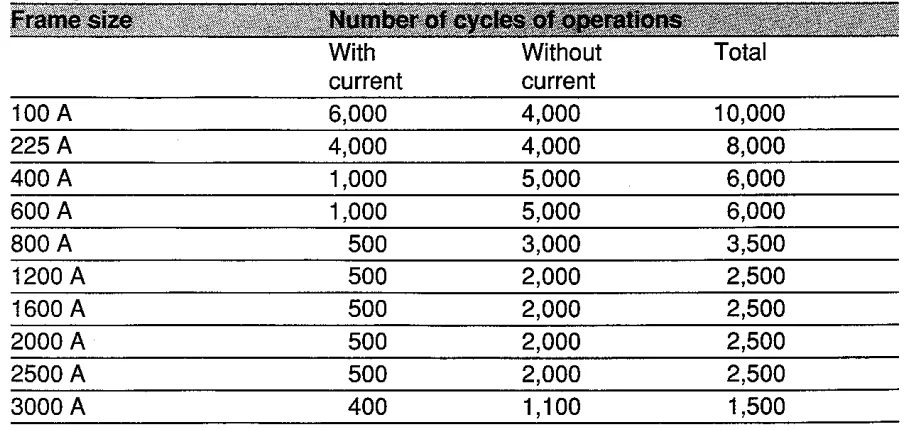
4. Service life of UL489
The requirements for different shell racks vary significantly.
5 The sequence and the Z sequence
The most distinctive feature of UL 489 is its two sets of breaking capacity data. The focus of Y lies in the overall three-phase breaking performance.
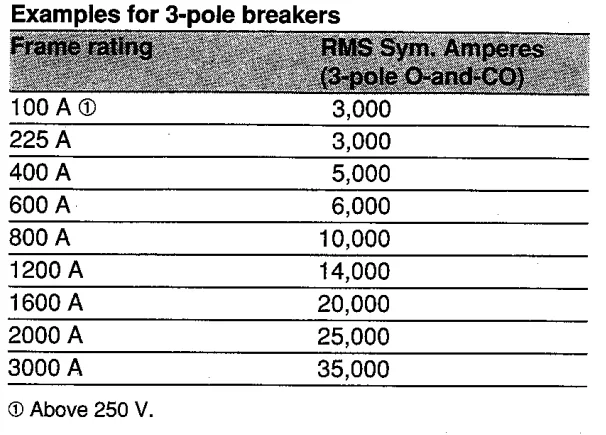
For three-pole circuit breakers rated at 240V,480V, or 600V, the requirement is not merely for all three poles to trip simultaneously; instead, each pole must first operate independently before confirming that all three poles trip together.
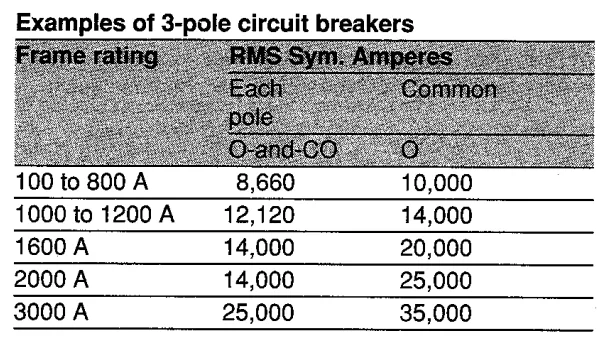
6 UL489 High Availability Fault Interrupt Capability
High fault current. This is not a conventional standard test sequence but an additional test. The procedure involves first passing all standard tests; if the fault interrupt capability exceeds the specified standard value, this verification phase is then conducted.
- Run the 200% calibration again.
- Complete the specified breaking operation under fault currents exceeding the standard value.
- If the current exceeds 2000 A, the power factor is set to 0.15–0.2, indicating lag.
- Finally, perform a 250% current trip test and a dielectric test at twice the rated test voltage.
II. IEC60947-2 places greater emphasis on the inherent capabilities of the circuit breaker itself.
The organizational structure of IEC differs significantly from that of UL. Instead of first establishing a comprehensive product validation chain, IEC first clearly defines the functionality of circuit breakers within systems.
1 Key Concepts in the IEC System
Class A: Not specifically designed for selective mating
Category B: For selective mating design, requires Icw capability
Icu: Maximum fracture capacity – how far it can fracture
Ics: Operation interrupt capability – Can it be used again after interruption?
Icw: Short-term tolerance capacity – whether capable of enduring brief delays and selective coordination
2 The four test groups of IEC
Unlike UL, IEC does not evaluate a product throughout its entire usage lifecycle but instead breaks down its capabilities for separate validation. This approach makes IEC more suitable for system selection and coordinated analysis between upstream and downstream stakeholders.
3 The IEC also addresses isolation separately.
In the IEC system, the ability to interrupt and the ability to isolate are not the same thing. If a circuit breaker is claimed to have isolation functionality, it is not sufficient to merely verify its capacity to interrupt fault current; additional requirements must be met regarding contact spacing in the open position, impulse withstand voltage, and leakage current. This reflects the essence of the IEC standard: it not only ensures the circuit breaker's operational reliability but also clearly defines each functional boundary.
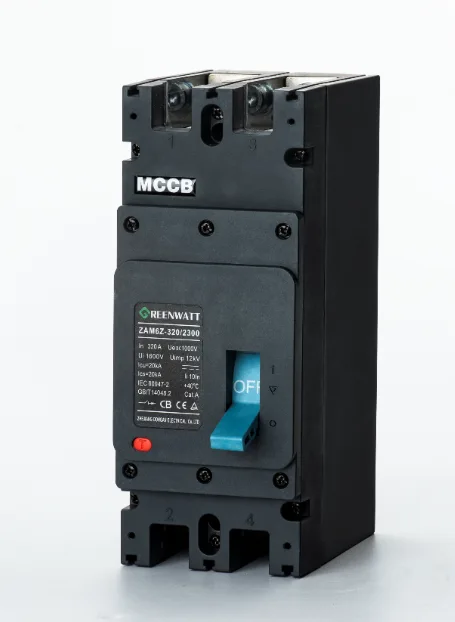
The ZAM6Z series DC1500V molded case circuit breakers designed by GREENWATT are developed in strict compliance with IEC 60947-2 standards, delivering a 20kA breaking capacity at DC1500V and operating under low temperature rise conditions at full load. They are suitable for DC photovoltaic energy storage systems in various harsh environments.